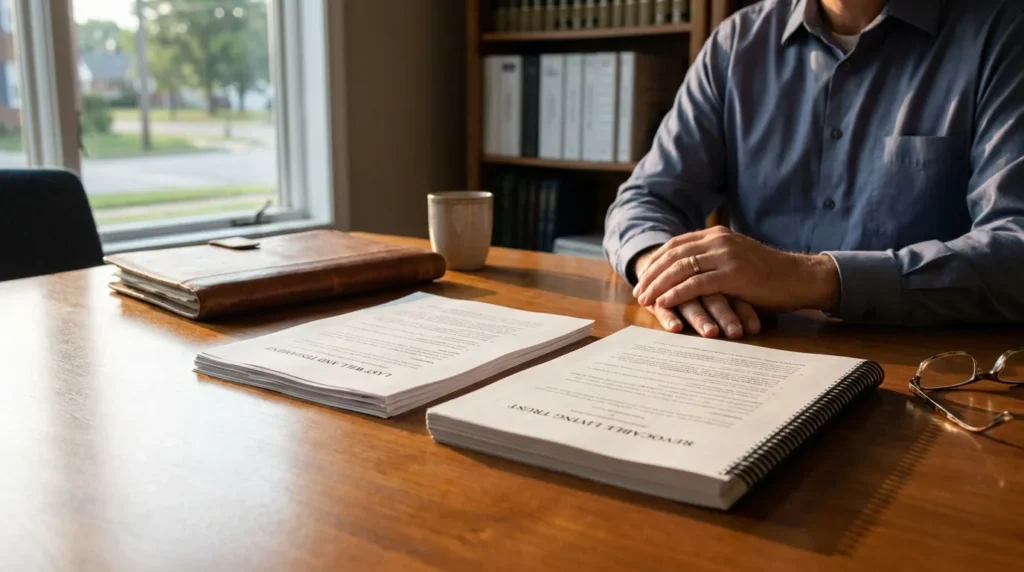
Why Witnesses Matter More Than Handwriting in Ohio
Key Takeaways: A handwritten will without witnesses is generally not valid in Ohio. Ohio law allows wills to be handwritten, but it does not recognize unwitnessed holographic wills signed in the state. Under R.C. § 2107.03, a written will must be signed at the end by the testator and then attested and subscribed by two or more competent witnesses in the testator’s conscious presence. A few narrow exceptions exist, including wills validly executed in another state and certain military wills. Limited court relief is also available under R.C. § 2107.24, but it rarely saves a will that someone wrote and signed alone. If a will is invalid, the estate may pass under intestacy laws, and the person’s choice of executor may not take effect. The safest approach is usually to sign a new will with two competent, disinterested witnesses and to have an attorney review any handwritten will you already have.
In most cases, a handwritten will without witnesses is not valid in Ohio. Ohio law accepts handwritten wills, but not wills that skip the state’s signing and witnessing rules. Some states recognize holographic wills, which are written and signed in the testator’s own hand with no witnesses. Ohio does not recognize a holographic will signed within the state unless it meets the same formalities that apply to typed wills. If you wrote your wishes on paper and signed them alone, a probate court may be unable to carry them out.
If you are unsure whether your will meets Ohio’s requirements, an attorney can review it before a problem comes up. Culpepper Law helps families in Miamisburg, Centerville, Springboro, and the greater Dayton area prepare wills that follow Ohio law and reflect what they want. Call 937-589-4144 or contact us now to schedule a conversation about your estate plan.

Handwritten Will Ohio Rules: What the Statute Requires
Ohio Revised Code § 2107.03 sets out how a will must be executed in Ohio. Except for oral wills, every will must be in writing, either handwritten or typewritten. The testator must sign at the end. Another person may sign the testator’s name if done in the testator’s conscious presence and at the testator’s express direction. Two or more competent witnesses must then attest and subscribe the will in the testator’s conscious presence. Each witness must have seen the testator sign or heard the testator acknowledge the signature.
These rules apply to written wills, regardless of how they were produced. A handwritten will can satisfy the Ohio will execution statute if it is signed at the end and attested and subscribed by two competent witnesses. A carefully typed will with no witnesses generally cannot.
The Core Elements of a Properly Executed Will
A valid Ohio will generally needs each of the following elements under R.C. § 2107.03:
- A written document, either handwritten or typed
- The testator’s signature at the end, or a signature made by another person at the testator’s express direction and in the testator’s conscious presence
- At least two competent witnesses who saw the testator sign or heard the testator acknowledge the signature
- Signatures by those witnesses, made in the testator’s conscious presence
If any one of these elements is missing, the will may face serious problems in probate. Homemade wills most often fall short on the witness requirement. Many people sign a handwritten letter expressing their wishes and assume that is enough. Under Ohio’s general execution rule, it usually is not.
How Ohio Compares to States That Allow Holographic Wills
Ohio requires witness attestation for written wills executed in the state, which separates it from states that permit unwitnessed holographic wills. Some jurisdictions treat a will as valid if the signature and material provisions are in the testator’s own handwriting, even with no witnesses. Ohio’s statute contains no general holographic will exception, so advice from online sources or other states may not apply here.
| Feature | Ohio (R.C. § 2107.03) | States Recognizing Holographic Wills |
|---|---|---|
| Handwritten will permitted? | Yes | Yes |
| Witnesses required? | Yes, two or more competent witnesses | Often no, if requirements are met |
| Testator signature required? | Yes, at the end of the will | Yes |
| Unwitnessed holographic will valid if signed in-state? | Generally no | Generally yes, subject to state rules |
Moving to Ohio can raise separate questions. Under R.C. § 2107.18, Ohio may admit a will to probate if it was validly executed under the law of the place where it was signed or where the testator lived at the time. An unwitnessed holographic will valid in another state may therefore still be honored in Ohio, depending on the facts. If you signed one in another state and now live in Ohio, have it reviewed.
Limited Exceptions to Know About
Ohio law has a few narrow exceptions, and they rarely help someone who wrote an unwitnessed will at home. Oral wills are covered by R.C. § 2107.60. They are limited to personal property, must be made during the testator’s last sickness, and carry other strict requirements. Certain military wills may be valid under federal law (10 U.S.C. § 1044d). R.C. § 2107.24 also lets a probate court, in limited circumstances, treat a document as a will even though it was not executed in full compliance with § 2107.03. The court must find clear and convincing evidence that the decedent prepared the document or caused it to be prepared, signed it, and intended it to be a will. The court must also find that the decedent signed it, or acknowledged the signature, in the conscious presence of two or more witnesses. A will written and signed alone would not meet that standard.
💡 Pro Tip: Do not count on a court-applied exception to save your plan. Exceptions require evidence your family may not be able to produce, and proving them can add time, cost, and stress to probate.
What Ohio Courts Have Said About Execution Formalities
Ohio courts have historically interpreted will execution statutes strictly. Chilcote v. Hoffman, 97 Ohio St. 98 (1918), is an Ohio Supreme Court case holding that the right to contest a will survives the death of the person entitled to bring such an action and may be pursued by that person’s successors in interest. The requirements for executing a valid will in Ohio are instead governed by R.C. § 2107.03, which requires the testator’s signature and attestation by two competent witnesses. R.C. § 2107.24 now provides a narrow exception to that rule.
In practice, a court usually cannot simply carry out what the decedent "obviously meant." If a document does not meet the statutory requirements and no recognized exception applies, the court will treat the person as having died without a valid will, unless an earlier valid will exists. The estate would then pass under Ohio’s intestacy laws, which may not match the decedent’s wishes. This is especially likely in blended families, unmarried partnerships, or households where the person wanted to provide for close friends or stepchildren.
What Typically Happens When a Will Fails
When a handwritten will is rejected, the people the testator meant to protect often pay the price. A stepchild, a longtime partner, or a favorite charity may receive nothing. The person’s choice of executor will not take effect, and the court will appoint an administrator instead. A nomination of a guardian for minor children may also fail, though the court can still consider the parent’s wishes. Unwitnessed wills are one of the most common mistakes with DIY estate plans, and the damage usually comes to light only after the testator has died.
Protecting Your Wishes With a Properly Executed Will
One of the most reliable ways to avoid problems with handwritten will validity is to execute your will correctly from the start. That means signing in front of at least two competent witnesses who then sign in your conscious presence. Many attorneys also recommend disinterested witnesses, meaning people who receive nothing under the will. Under R.C. § 2107.15, a witness who is also a beneficiary may lose part or all of their gift unless two other disinterested witnesses also signed. A lawyer can also help you coordinate your will with beneficiary designations, a revocable living trust, or a pour-over will.
An unwitnessed will kept in a drawer can create false confidence. A handwritten will Ohio lawyer can look at what you already have, identify any gaps, and help you put a compliant document in its place.
💡 Pro Tip: Review your will after marriage, divorce, the birth of a child, a move, or a major change in your assets. Updates generally must follow the same formalities as the original will.
Frequently Asked Questions
1. Can I write my own will by hand in Ohio?
Yes. R.C. § 2107.03 allows handwritten wills. You must still sign at the end, and two or more competent witnesses must attest and subscribe it in your conscious presence.
2. Is a holographic will Ohio residents sign without witnesses ever valid?
Generally, no, if it was signed in Ohio. Narrow exceptions may apply, including certain military wills, wills validly executed under another state’s law, and the limited relief under R.C. § 2107.24, which still requires two witnesses. These exceptions depend on specific facts and are not guaranteed.
3. Does my will need to be notarized in Ohio?
No. R.C. § 2107.03 does not require notarization. A notary does not take the place of the two required witnesses.
4. What happens if my handwritten will is found invalid?
Your estate may pass under Ohio’s intestacy laws instead of according to your written wishes, unless an earlier valid will exists. Your executor choice and other instructions may also fail.
5. Can I fix an unwitnessed will I already wrote?
Yes, as long as you are alive and have testamentary capacity. You can sign a new will that follows Ohio’s formalities, or re-sign the existing document in front of two competent witnesses. An attorney can help make sure it is complete and properly signed.
Securing Your Family’s Future Starts With Proper Execution
Ohio accepts handwritten wills, but generally not unwitnessed ones signed in the state. R.C. § 2107.03 requires your signature at the end of the will and the attestation of two or more competent witnesses. Ohio courts have historically applied these formalities strictly. Exceptions are narrow and depend on the facts. A properly executed will is one of the most dependable ways to make sure your property, your executor choice, and your guardian nominations hold up when your family needs them.
You can take steps now so your loved ones avoid uncertainty later. Culpepper Law helps Ohio families create and update wills that meet state requirements and reflect their wishes. Call 937-589-4144 or reach out to our team today to start building an estate plan you can rely on.
Disclaimer: This content is for informational purposes only and is not legal advice. Every case is unique, and results may vary. Consult an attorney about your specific circumstances.